

Creator campaigns feel difficult to measure because the industry keeps focusing on the wrong layer. Dashboards overflow with views, engagement rates, and estimated values, yet the most important question remains unanswered:
Did the creator actually deliver what was agreed in the brief?
Creator campaign measurement has become one of the biggest challenges in influencer marketing.The uncomfortable truth is this: most reporting systems measure performance without first verifying execution. They track what platforms report, not what actually happened inside the content. And until delivery is independently verified — visually, audibly, and legibly — campaign measurement will always feel incomplete.

Why creator campaign measurement feels broken
Most discussions blame algorithms, engagement volatility, or attribution complexity. Those factors matter, but they are not the core issue. The real problem is structural: delivery is assumed, not verified.
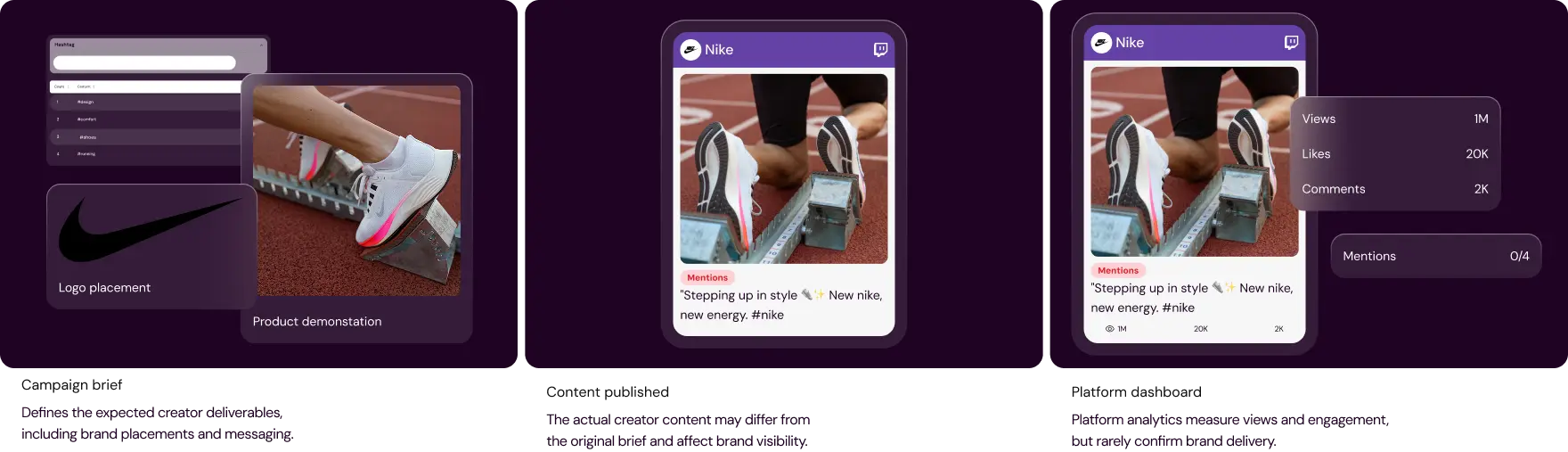
Once content goes live, reporting jumps straight to views and engagement. But posting does not guarantee that the agreed deliverables were executed correctly. A logo may be barely visible, a required mention may be skipped, and a story may disappear early.
In creator marketing, we are measuring performance before confirming execution, and that reversal makes reporting fragile. You cannot optimise ROI if you have not first verified delivery.
The gap between brief and reality
Every creator campaign begins with clearly defined expectations. The brief outlines format requirements, placement rules, mandatory mentions, caption guidelines, and timing commitments. On paper, delivery seems precise and measurable.
Once content goes live, reporting often jumps directly to engagement and reach. What gets lost in that transition is verification of whether those original expectations were actually fulfilled inside the content. That missing step creates a structural gap in measurement.
A logo may technically appear but be barely visible. A required spoken mention may be shortened or skipped. These nuances rarely surface in dashboards, yet they directly affect brand exposure and campaign success.
Dashboards don’t equal verification
The creator marketing ecosystem has built powerful tools for discovery, workflow management, and analytics aggregation. These systems summarise performance data effectively. However, they rarely validate what actually happened inside the content itself.
Exposure lives in pixels, speech, and on-screen text. Without analysing those elements directly, reporting remains one step removed from reality, and strong engagement numbers can mask weak brand presence or missed deliverables.
The three layers of creator campaign measurement
Creator campaign measurement works best when it follows a clear analytical structure. At its core, campaign analytics operate across three layers:
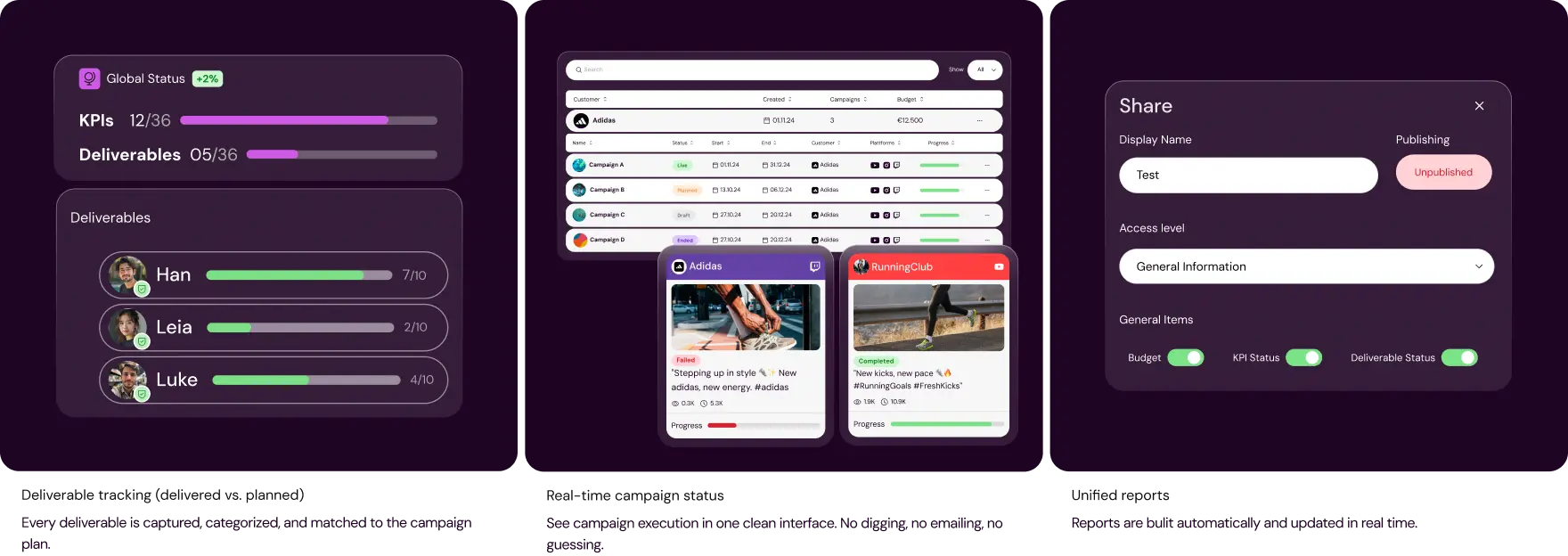
1. Delivery: Verification that agreed deliverables were executed as planned, including correct branding, integrations, formats, and timing.
2. Campaign status: A real-time view of how the campaign is progressing. This includes tracking which assets are live, identifying missing or delayed content, and monitoring whether all planned activations are on track.
3. Reporting: Analysis of campaign outcomes, including reach, engagement, and overall performance, based on a verified foundation of delivery and campaign execution.
This layered approach ensures that performance metrics are interpreted within the correct context. Without delivery verification and campaign status, platform metrics alone cannot provide a reliable picture of campaign impact. Creator campaign measurement becomes clearer when it is viewed as a structured framework consisting of these analytical layers.
What the industry builds — and what’s missing
Most creator platforms were built to solve operational challenges. They help teams discover creators, manage campaigns, track budgets, and aggregate platform data. Their reporting layers typically rely on API metrics, engagement tracking, and estimated value calculations.
These capabilities are valuable, but they operate above the content layer. They summarise what platforms record rather than independently validating what actually appeared inside the video, story, or post. As a result, execution is often inferred instead of proven.
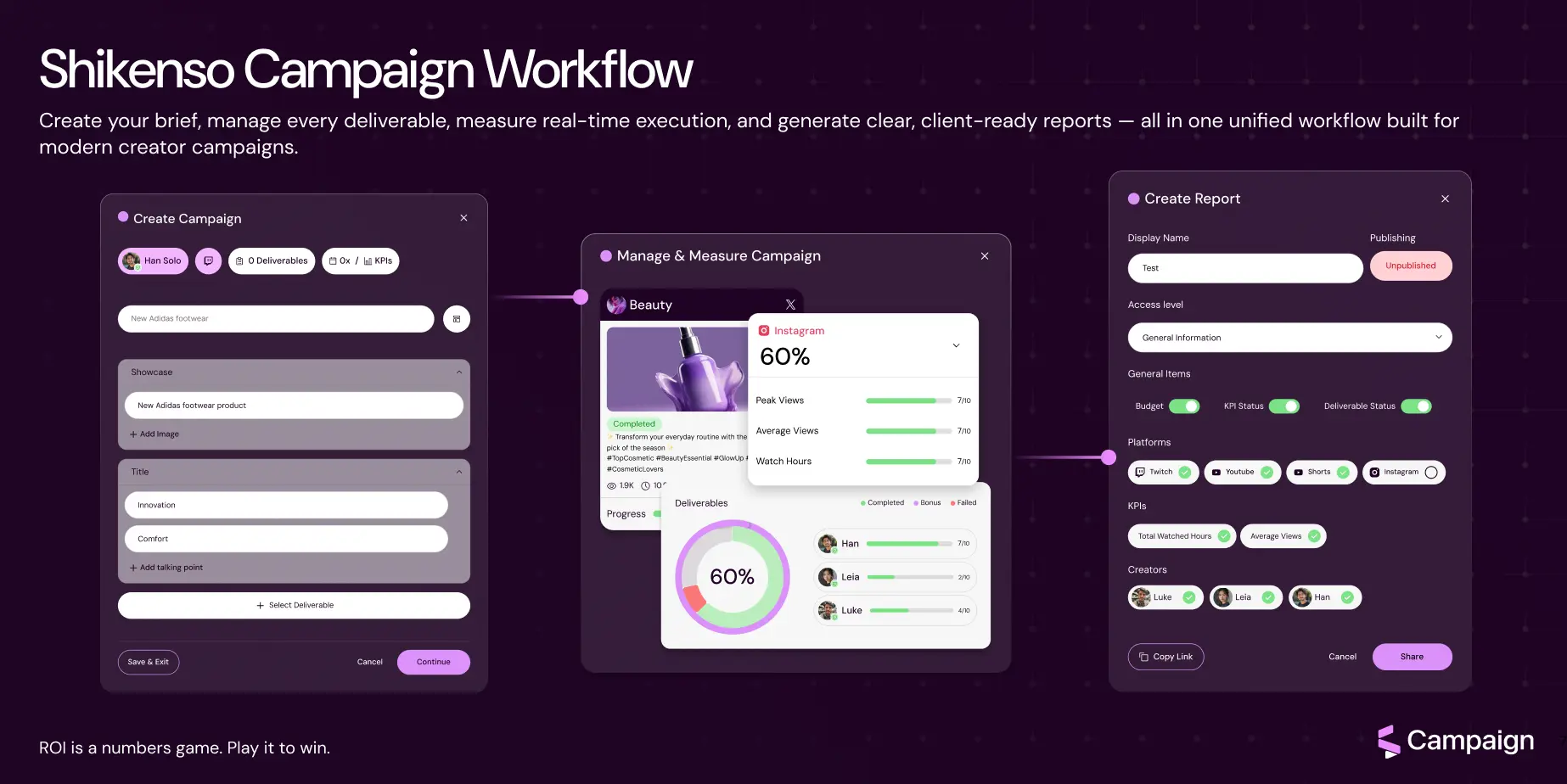
We are building a different layer. One that sits between execution and reporting. Instead of relying solely on metadata, we analyse the content itself. That means detecting visual brand presence, identifying talking points, recognising titles, captions, chatbot messages and chat commands as well as analysing game-play footage right out of a Twitch stream or social media post.
This verification layer turns campaign deliverables into structured data. It makes delivery measurable, creators comparable, and reporting credible.
What breaks without verification
When delivererables are not independently verified, campaign sucess is reduced to a binary variable. Either KPIs were met or they weren't. In reality, campaign verification has multiple layers.
Reporting also becomes reactive. Issues are often discovered after campaigns end, when changes are no longer possible. Without real-time verification, optimisation happens too late.
Finally, campaign and creator comparison becomes unreliable. If success is not standardised, evaluating performance across creators and markets becomes guesswork. Performance data without delivery context creates an illusion of precision.
What measurement looks like when it’s done right
Effective measurement begins with confirmation of content delivery. Before analysing performance, reporting verifies that content went live as planned and that brand deliverables met agreed standards. This ensures execution is not assumed but proven.
When delivery is verified, reporting becomes structured and reliable. Brand exposure becomes measurable, creators become comparable, and ROI becomes credible. Measurement shifts from interpretation to infrastructure.
Creator campaigns are not difficult to measure because marketing is complex. They become difficult when performance is analysed before execution is confirmed. Once verification becomes the starting point, measurement becomes clear, comparable, and scalable.
Get new insights straight to your inbox
Don’t miss out on the insights that the press and media rave about!